Originally this article was going to be about top Instagram accounts to follow for upcoming fashion weeks. But there are only so many pictures of macarons, flowers, pigeon-toed shoes and other nonsense one can suffer through before you get to the good stuff - you know, the actual clothes and shows.
Instead, here are 10 fashion illustrators you should follow on Instagram for fashion week. Some of them will be live-sketching at events, while others might recreate the looks afterwards - and some just draw people with clothes on.
Whichever way it goes, their beautiful mark-making is much more interesting than another perfectly manicured hand gripping a Starbucks.
10 Fashion Illustrators to Follow on Instagram for Fashion Week
Blair Breitenstein @blairz
Loose portraits of melancholic, alien-like models.
Scott W Mason @scottwmason
Big black lines with primaries and plenty of s-p-a-c-e.
Duangkamol Suthumachote @daydream.drawing
Soft, dreamlike marker work (and occasionally fishes).
James Davison @jamesdavinsonstudio
Slightly aggro, sexy punk stuff. A bit NSFW.
Cristina Alonso @cristinaalonsoillustration
Gorgeously girly, super-pink. Just enjoy it.
Rachel Merrill @ohhhaeee
My notes say “Tin Tin style fashion illustration”. Very cool.
Nellyaba @nellyaba
Colourful, vibrant and particularly like the work on grey ground.
Mirabelle @mirabelle_fashion_illustrator
Rambling Miro-style lines and puddles of watercolour.
Yuko @pontariver
Puffs of pastel and models fading into the background.
Monika Kozak @mon_and_ka
Slightly creepy block colour people.
Thanks for reading. If you liked this article, you might find these ones interesting too:
These issues will continue to influence designers over the next twelve months, but what about fashion businesses and their customers? Let’s get a little Mystic Meg and predict the future: read on for the need-to-know big fashion issues for 2016 and a snapshot of how they might affect your work and fashion habits.
#1 SUSTAINABILITY
Do consumers really care about the sustainable credentials of their clothes? Mark Sumner, previously Sustainable Raw Material Specialist with Plan A at M&S and now my colleague at the University of Leeds, often cites research from the high street giant showing consumers put ethics and sustainability at the top of their ‘requirements’ list when questioned.
But when it gets to point of purchase, ethics drops right down below price, quality and brand. Not surprising, but why is sustainability such a buzzword?
In part because newer generations of consumers look like they might care more deeply about where fashion is coming from and, importantly, how fashion businesses are operating sustainably. Lucie Greene, in Harriet Quick’s article for Wallpaper*:
Millennials are expecting more than ever from brands, and they’re increasingly starting to lead in the luxury space, causing a need for luxury to pivot to appeal to them … They expect hyper-transparency, ethical behaviour, sustainability and values from the brands they consume.
In 2016, business operations will need to be sustainably-managed too, from dealing with energy shortages to your PR and marketing teams handling ‘greenwashing’ claims. Across finance, marketing, consumer behaviour and day-to-day working life, 2016 will be the year we truly start to feel the pull of sustainability.
The future of advertising looks like this, and it is bloody glorious. Hardly anyone in ad land has ever used Snapchat, let alone gets its potential … the excellence of this campaign is its insistence to create and leverage ‘urgency’ in the audience. In a time when appointment to view is increasingly hard, where consumption is more difficult to achieve through proliferation of choice, this feeling of urgency is a new secret weapon.
So 2016 will be the year of focus for fashion brands (and maybe individuals too). Marketing spend is wavering and teams are stretching resources across multiple channels with negligible ways of measuring benefit. This year brands will pull back and focus attention on core communication channels - maybe not even social media - and long-term, narrative-driven, personalised marketing.
#3 GLOBAL CONSUMERS
The fashion industry is collecting more data than ever about its customers, as ASOS’ 2014 financial report shows, or as BoF highlighted in their special report on Inditex’s incredible tech silo. Brands are getting better at segmenting data and - in many cases - serving up the right stuff to the right people.
World migration and forced displacement are reconstructing societies; in 2014, the number of people moving due to forced displacement rose by 8.3 million. Antonio Guterres, the UN High Commissioner:
We are witnessing a paradigm change, an unchecked slide into an era in which the scale of global forced displacement as well as the response required is now clearly dwarfing anything seen before.
Businesses (fashion or not) have whole new consumer groups to deal with and, in a few years time, a new generation of young customers who will be products of two or more cultures, with a mentality similar to the Baby Boomers of post WWII.
All this means that, in 2016, fashion business will start to develop highly specific consumer profiles based on dependable, longitudinal data. Brands will emerge catering to those consumers appearing on the ‘edges’ of existing demographics. You’ll be asked to put your customer’s world under a microscope, which could mean enlisting the help of people trained in anthropology, ethnography and cultural studies who’re able to dissect the unique circumstances surrounding these global consumer groups. And you’ll need to articulate your customer profile in much more detail - physical, emotional, spiritual and psychological - than ever before.
#4 PERSONALISATION
As consumer groups become more niche so to does our interest in personalised information. The flavour of neo-liberalism can be tasted across every sphere of life, heavily influencing our ideas of the individual as entrepreneur, as unique, as isolated, or as ‘special’ (just for existing).
Fashion brands have dabbled in personalisation for decades. A recent example spawning plenty of copies was Burberry’s monogrammed ponchos and scarves from 2014 and 2015. Widespread personalisation in 2016 will mean more brands creating simpler ‘mix and match’ product personalisation options - like Nike’s build your own trainers or Ferragamo’s build your own classic shoe - but also developing services, marketing and content tailored to individuals.
Rather than personalisation purely being associated with high-end brands, 2016 will see middle-range fashion businesses echoing the service levels of independents with the consistency of luxury names at every customer touch point. As social platforms develop their marketing algorithms, consumers are more likely to be served relevant content, so the in-store or on-paper experience will need to reflect this.
The trick for fashion brands will be creating cohesive campaigns which can be highly-individualised and yet part of a greater whole. You might need to re-train shop staff in personal service skills, ramp up your customer response teams as a whole, or dedicate team members to developing ‘personal marketing’ tactics - from hand-written thank you notes to email newsletters where content segments are swapped depending on the recipient.
Over the next year I’ll be writing on each of these issues in turn, delving deeper into why they’re important in 2016 and how you can work with them, rather than against them.
Thanks for reading.
Are there any big issues you think I’ve missed?
Let me know in the comments.
Photographs: [space] by NASA via Unsplash | [leaf] by Joe Wroten via Unsplash | [river] by Leo Rivas-Micoud via Unsplash | Freckles by Frédéric Poirot via Creative Commons | Tourist - Fashion - Santa Fe Indian Market by Larry Lamsa via Creative Commons | Icons found via Creative Commons and edited | All images available for non-commercial re-use license with credit
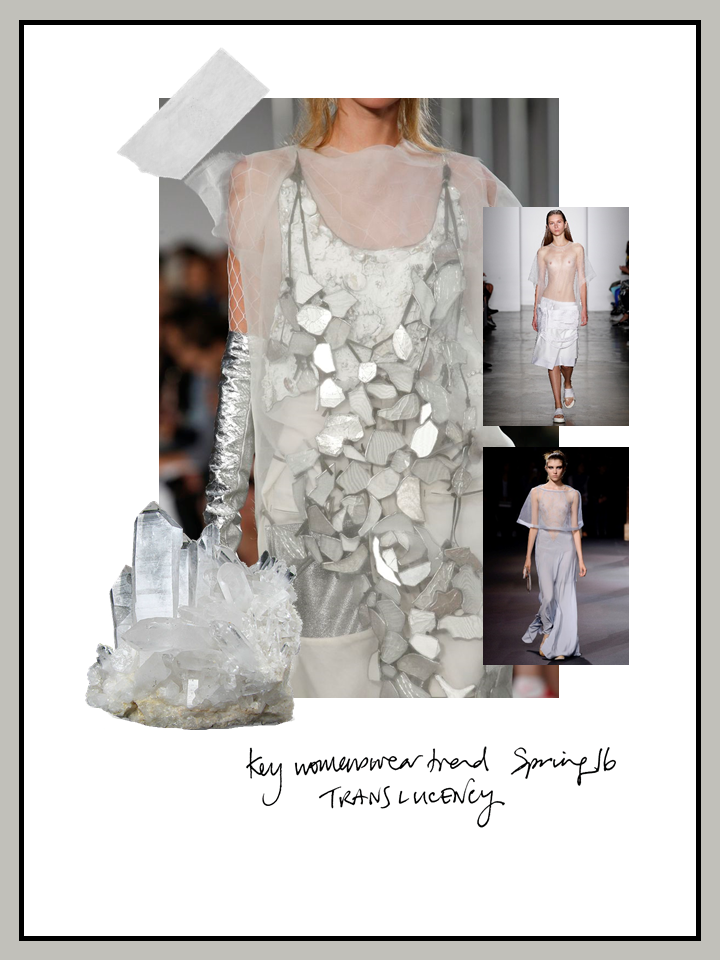
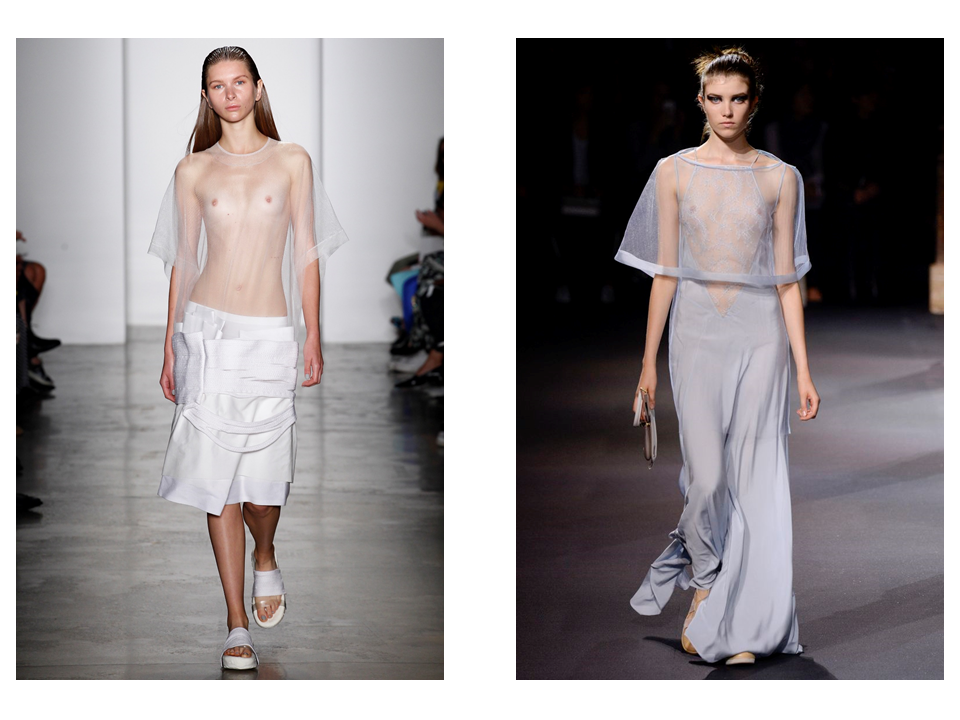
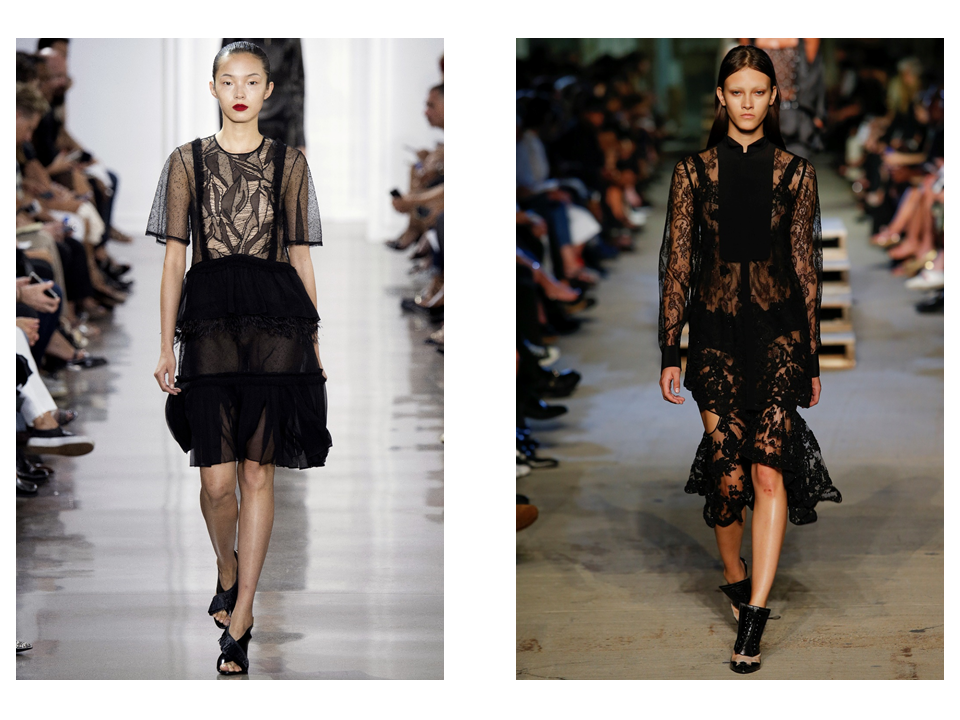
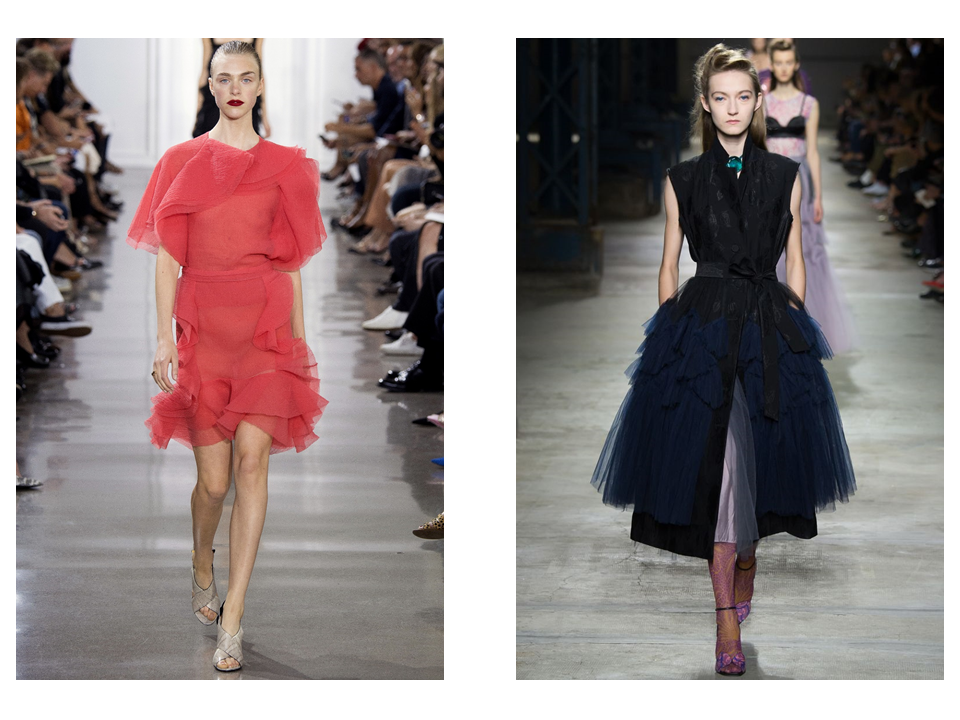
In my last article I explored a key SS16 womenswear trend, the triangle silhouette. This time I’ll be looking at translucency, which featured in a number of shows in stripes, bands, ruffles and frills.
SS16 Trend: Translucency
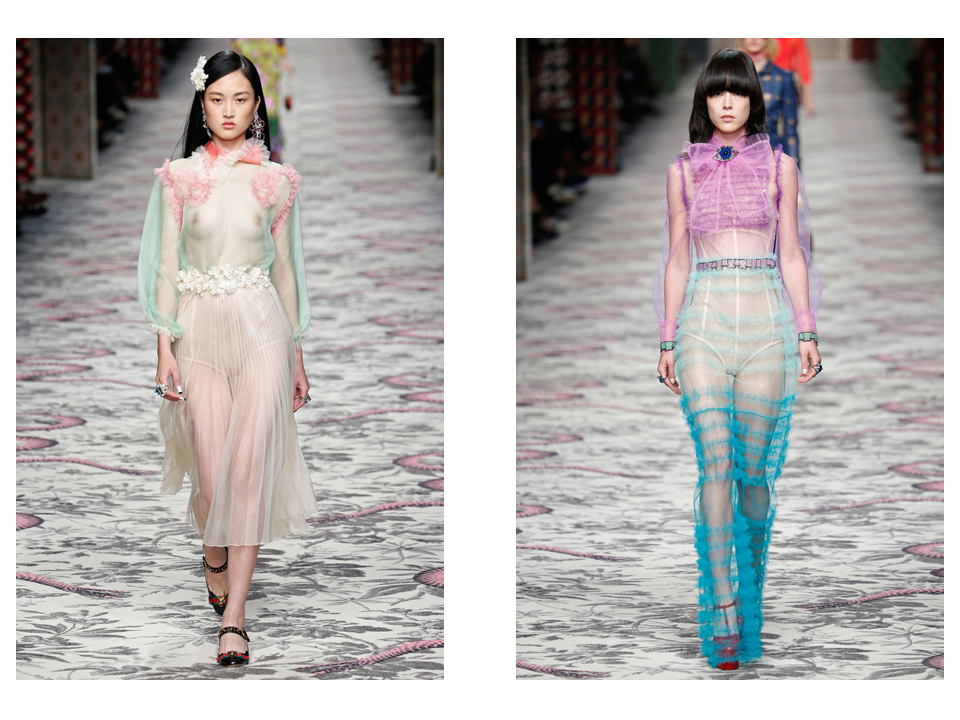
There were translucent fabrics used in nearly all of the shows I scanned through (about 50 in total). Their application included banded maxi dresses at Burberry Prorsum, tightly-packed ruffles at Jason Wu, and gradient-hued at Gucci.
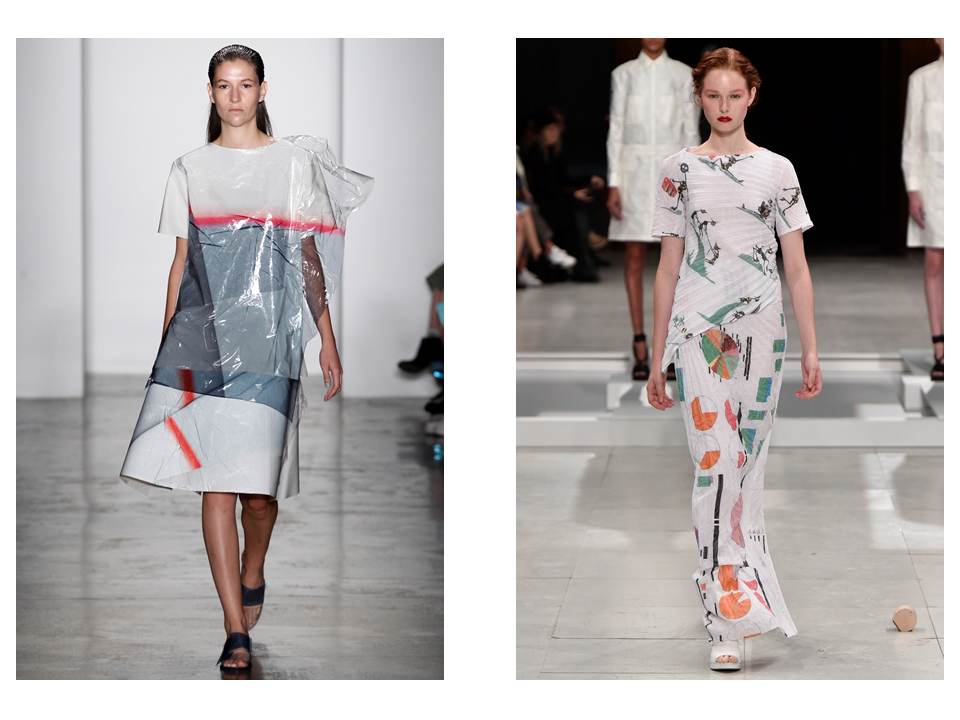
Parsons MFA SS16 ready to wear (look 26) and Chalayan SS16 ready to wear (look 25)
Translucent fabrics can be beautiful when used in particular shades and cuts - and a bit trashy when they’re not. While a translucent fabric can cover the body completely, it simultaneously reveals it. This balance of visibility/invisibility is a key factor of translucent fabrics of all opacities, from the transparent plastics of Parsons MFA to the almost opaque printed textiles of Chalayan.
Gucci SS16 ready to wear (looks 6 and 57)
Exploring the triangle
Historically, translucent fabrics evoke a host of images: tulle elements of 1950s ballgowns, clear plastic macs of the 60s and bodycon meshes of the 80s (or Strictly Come Dancing). Plus there’s all the wafting, ethereal images of 1920s and 30s women in elegant layers, swathed in delicate cotton - versus futuristic executions of Barbarella-meets-Courreges visors, skirts and jackets. Translucent garments across time have a strange hidden power: they feel ‘functionless’ because they’re barely there, yet can be waterproof, warm and protective.
Damir Doma SS16 ready to wear (look 9) and Burberry Prorsum SS16 ready to wear (look 27)
Translucent fabrics cover and uncover; they veil and unveil. They’re sexually charged, because you can see everything and yet it’s fuzzy, hidden, mysterious. Some of the translucent fabric applications for SS16 reminded me of my friend Het’s brilliant Pinterest board, where she collects images of transparent materials used in clothing and accessories. Translucent fabrics are like blister packaging for the body: everything is on display but nothing can be obtained until you pop the cover off.
Practically, translucent fabrics based on natural fibres with a very fine weave or sportswear materials (like mesh) are useful in hot weather, as they allow the body to be covered and yet remain cool. They can also be layered in a visually interesting way and, depending on their construction, to help regulate temperature.
Climate responsive
Changes in the global climate are already having an impact on fashion retail, disruption the traditional pattern of when new season garments go into store. However, it’s also getting designers to reconsider how they can conceive garments which work for a variety of weathers.
Translucent fabrics can be layered effectively, so for hot weather we can wear them with nothing underneath and equally, in cold weather, can layer them up and they still maintain their uniquely delicate and feminine quality. While they might not seem like all-weather garments, they are.
Plus, this mixing of textures and ‘registers’ of garments (a translucent chiffon evening blouse with an everyday t-shirt, for example) plays very well into the high-low dressing trend and general bricolage of modern consumers.
Aquilano.Rimondi SS16 ready to wear (look 24) and Gabriele Colangelo SS16 ready to wear (look 13)
Fragility/security
Like Snow White in her glass coffin, totally secure and yet at any moment surrounded by dangerous shards, I see the use of translucent materials as trying to capture some of those confusions around the current fragile/secure global mentality.
Our political and military security is tighter and more insidious than ever, yet our sense of fragility - that something could be broken - continues to grow as we absorb fragments of terrifying information from multiple sources.
Using translucent fabrics give designers an opportunity to protect and clothe the body but in a seemingly ‘weak’ way, exposing fragility (the skin and body itself) while still being securely covered.
Snow White’s glass coffin was designed for everyone to see her beauty, but be unable to get near to her. In a similar way translucent fabrics could be seen as a shield, protecting bodies from aggression but allowing their beauty to be gazed upon.
Parsons MFA SS16 ready to wear (look 16) and Vionnet SS15 ready to wear (look 10)
‘New’ eroticism
Translucent fabrics have been used for centuries as a sexually-charged component of women’s dressing, so there’s nothing new about using them for SS16 to denote eroticism.
However, it is in contrast to previous incarnations of sexual allure on the catwalk. It’s less retro than nu-New Look corsetry, less macho than 90s grrrls revisited, less traditional than Ralph Loren’s suiting or Diane Von Furstenburg’s wrap dresses.
Alexander McQueen SS16 ready to wear (look 11) and Givenchy SS16 ready to wear (look 44)
Translucent fabrics are challenging as erotic signifiers, because they protect and expose - you can look but you can’t touch. I see this as connected to the way women want to be looked at (as part of the new movement in feminism) and trying to control that gaze more effectively.
And to mention it again, the emergence of strong Muslim women as a consumer group is important here. The veil and the covered body are seen by many as an integral part of Islamic teachings, and have naturally developed their own sexual charge (because whatever women wear, anywhere, there will be sexual charge associated with it).
Potentially the use of translucent fabrics is a way to explore new ways of thinking about eroticism: a more controlled gaze, a stronger acceptance of fragility, an acknowledgement of how what you can’t see is as sexually powerful as what you can.
Jason Wu SS16 ready to wear (look 26) and Givenchy SS16 ready to wear (look 75)
Frou-frou feminism
In the last trend article, where I explored the base down triangle, I mentioned how this strong shape could be a response to new forms of feminism: stronger and more accepting of the disruptiveness in the movement and in women.
Similarly, the trend for translucent fabrics has a relationship with new movements in feminism. The application of translucent fabrics for SS16 included minimal touches in blocks or stripes, but also a range of ‘frou frou’, super-fussy applications. Translucent fabrics were packed into tight layers of ruffles, in flounces across the body, in double ruffles with raw edges, and in paperbag waistlines.
Jason Wu SS16 ready to wear (look 31) and Dries Van Noten SS16 ready to wear (look 57)
The fastidious application of typically ‘feminine’ details was often on garments with more ‘masculine’ colour palettes and shapes, as if the two genders were colliding. This could be another indicator of designers working out the desires of new feminist consumers: translucent fabrics allow for ‘feminine’ fragility and ‘masculine’ strength depending on their application.
There’s also a feeling designers are trying to reclaim frou-frou for women. Some trends which are symbols of girliness (for example, pigtails or frilly ankle socks) are rejected by an 18+ consumer because of their pre-adolescent connotations. But the idea of frou-frou - of flounces, frills, pastels, ribbons and fussy details - could work for those adult consumers when used in contrasting colour palettes and with stronger silhouettes. If the newest feminism is about accepting diversity, then part of that must be accepting you can enjoy ‘girly’ clothes and still be a complex and self-contained woman.
Ashish SS16 ready to wear (look 15) and Noir Kei Ninomiya SS16 ready to wear (look 3)
References
Feature image: Pucci, G. 2015. Untitled (Maison Margiela SS16 Ready to wear look 5 detail). Online. [Accessed 23 November 2015]. Available from: http://www.vogue.com/fashion-shows/spring-2016-ready-to-wear/maison-martin-margiela/slideshow/details#5
Indigital. 2015. Untitled (Gucci SS16 Ready to wear look 6). Online. [Accessed 19 November 2015]. Available from: http://www.businessoffashion.com/fashion-week/2016ss/gucci/collection/look/6
Indigital. 2015. Untitled (Gucci SS16 Ready to wear look 57). Online. [Accessed 19 November 2015]. Available from: http://www.businessoffashion.com/fashion-week/2016ss/gucci/collection/look/57
Vlamos, Y. 2015. Untitled (Jason Wu SS16 Ready to wear look 31). Online. [Accessed 19 November 2015]. Available from: http://www.vogue.com/fashion-shows/spring-2016-ready-to-wear/jason-wu/slideshow/collection#31
Vlamos, Y. 2015. Untitled (Jason Wu SS16 Ready to wear look 26). Online. [Accessed 19 November 2015]. Available from: http://www.vogue.com/fashion-shows/spring-2016-ready-to-wear/jason-wu/slideshow/collection#26
Pucci, G. 2015. Untitled (DamirDoma SS16 Ready to wear look 9). Online. [Accessed 19 November 2015]. Available from: http://www.vogue.com/fashion-shows/spring-2016-ready-to-wear/damir-doma/slideshow/collection#9
Pucci, G. 2015. Untitled (Aquilano.Rimondi SS16 Ready to wear look 24). Online. [Accessed 19 November 2015]. Available from: http://www.vogue.com/fashion-shows/spring-2016-ready-to-wear/aquilano-rimondi/slideshow/collection#24
Arnold, Weston K. 2015. Untitled (Gabriele ColangeloSS16 Ready to wear look 13). Online. [Accessed 19 November 2015]. Available from: http://www.vogue.com/fashion-shows/spring-2016-ready-to-wear/gabriele-colangelo/slideshow/collection#13
Feudi, M. 2015. Untitled (Givenchy SS16 Ready to wear look 75). Online. [Accessed 19 November 2015]. Available from: http://www.vogue.com/fashion-shows/spring-2016-ready-to-wear/givenchy/slideshow/collection#75
Feudi, M. 2015. Untitled (Givenchy SS16 Ready to wear look 44). Online. [Accessed 19 November 2015]. Available from: http://www.vogue.com/fashion-shows/spring-2016-ready-to-wear/givenchy/slideshow/collection#44
Tondo, M. 2015. Untitled (Burberry ProrsumSS16 Ready to wear look 27). Online. [Accessed 19 November 2015]. Available from: http://www.vogue.com/fashion-shows/spring-2016-ready-to-wear/burberry-prorsum/slideshow/collection#27
Indigital. 2015. Untitled (Ashish SS16 Ready to wear look 15). Online. [Accessed 19 November 2015]. Available from: http://www.vogue.com/fashion-shows/spring-2016-ready-to-wear/ashish/slideshow/collection#15
Vlamos, Y. 2015. Untitled (Dries Van Noten SS16 Ready to wear look 57). Online. [Accessed 19 November 2015]. Available from: http://www.vogue.com/fashion-shows/spring-2016-ready-to-wear/dries-van-noten/slideshow/collection#57
Ninomiya, Noir K. 2015. Untitled (Noir Kei Ninomiya SS16 Ready to wear look 3). Online. [Accessed 19 November 2015]. Available from: http://www.vogue.com/fashion-shows/spring-2016-ready-to-wear/noir-kei-ninomiya/slideshow/collection#3
Tondo, M. 2015. Untitled (Parsons MFA SS16 Ready to wear look 26). Online. [Accessed 19 November 2015]. Available from: http://www.vogue.com/fashion-shows/spring-2016-ready-to-wear/parsons-mfa/slideshow/collection#26
Tondo, M. 2015. Untitled (Parsons MFA SS16 Ready to wear look 16). Online. [Accessed 19 November 2015]. Available from: http://www.vogue.com/fashion-shows/spring-2016-ready-to-wear/parsons-mfa/slideshow/collection#16
Tondo, M. 2015. Untitled (Alexander McQueen SS16 Ready to wear look 11). Online. [Accessed 19 November 2015]. Available from: http://www.vogue.com/fashion-shows/spring-2016-ready-to-wear/alexander-mcqueen/slideshow/collection#11
Yannis, V. 2015. Untitled (Chalayan SS16 Ready to wear look 25). Online. [Accessed 19 November 2015]. Available from: http://www.vogue.com/fashion-shows/spring-2016-ready-to-wear/chalayan/slideshow/collection#25
Yannis, V. 2015. Untitled (VionnetSS16 Ready to wear look 10). Online. [Accessed 19 November 2015]. Available from: http://www.vogue.com/fashion-shows/spring-2016-ready-to-wear/vionnet/slideshow/collection#10
The fashion industry tells us we should care about fashion. But do we care about the people in fashion?
This question has been on my mind for a long time. Thinking about how care – a soft, human emotion – can fit into the machinery of the fashion industry is difficult. Caring and profitable business don’t often go hand-in-hand. But incidents of care – and a lack of care – regularly occur in the fashion industry.
‘Care’ for me means the process of thinking about and looking after other people: something which is deeply emotional and highly cognitive (and difficult). Think about the ways in which you care for work colleagues: you observe their thoughts and behaviours, you keep track of their progress, provide advice when needed, and ‘review’ those behaviours and processes regularly.
You do this by asking ‘How are you?’ and listening to the answer.
It’s clear that caring about people in the fashion industry is on the agenda, whether that’s working to care more or letting slip that you don’t give a toss. But all this care/lack of care comes from big organisations and big names. Do consumers care about those in fashion? If so, who and how?
*I’m still unsure whether this is simple yet searingly-awkward brand protection and transparency, or the man genuinely doesn’t believe women over a size 10 should wear his gear. Either way: ouch.
I created two mindmaps to work through these ideas. Firstly, who is there in fashion to care about?
These groups are based on the points in fashion’s journey (or commodity chain) from design to production to consumption. Many sectors of the fashion industry are multi-faceted, like retail: this includes a brand’s identity and execution but also shop workers and retail environments.
From this I worked through key factors that I believe define our relationships with these sectors.
These relationship-defining concepts are flexible and this is just one way of approaching the issue of care; I’d like to see how other people think about it. This diagram boils down into seven care factors (an example for each is below):
Availability: how soon can I get a garment?
Ethics: how ethically sound is this process?
Innovation: how new is this object?
Price: how expensive is this item?
Quality: is this item high or low quality?
Uniqueness: how well-known is this item?
Value: how much is something worth?
How do these factors work?
These factors can be applied to the examples of care/lack of care I noted earlier:
Vogue launching The Health Initiative – ethics and (maintaining) quality
The Rana Plaza factory collapse – quality, ethics and value (is it worth it?)
Urban Outfitter customers as “upscale homeless” – lack of value and comprehension of uniqueness
I used these factors and sectors to create a survey (sent out on social channels) where respondents rated the seven factors in order of importance when thinking about the care of each sector in the fashion industry (from one to seven, one being the most important).
Only a few people completed the survey (I’ll explain why shortly) but here are the top three results for each sector:
Observations
Price only appears once, as the third most important factor of care for retail. I expected it to appear a lot more. The belief that consumers only care about price is simplistic but a consistent media story.
Publishers and faces are recognised and cared for due to uniqueness. Is this because of a genuine desire for something new and different, or because we are pushed the new and the different by editors and agents?
Quality was the most frequent factor of care and I’m pleased. We want things to be good, not just cheap or quick. Establishing processes of caring is all about ensuring better quality – whether that’s higher quality garments through caring about factories, or higher quality relationships through caring about colleagues.
These results were gleaned from a tiny, teensy set of data. Why?
Because the whole survey was too removed from most people’s experience of fashion.
Asking most people whether they care about a distribution business being good quality, or a publisher having ethical standards, is like asking a bumblebee if she cares about sales of Crunchy Nut. She might do. But there are so many other, more pressing issues when it comes to her current predicament, she can’t think about Crunchy Nut right now.
There’s the same reaction with fashion.
@ebsnare I get that, but my point is that I don’t have the luxury to pick on those bases. So little clothing fits that I can’t afford to…
There are so many problems with everyday fashion that consumers simply don’t have the time, energy or finance to start caring about distant and seemingly-unconnected sectors of the fashion industry. The high street is plagued by poor quality, poorly-fitting fashion, and our reading space with editorial promoting body-shaming and the need to disguise oneself through fashion. Consumers’ everyday experiences with the fashion industry – retail, publishers, famous faces – is not necessarily a positive one, which makes caring after that even harder; just like that first encounter with a grouchy colleague makes giving a toss a lot trickier.
People care about fashion and what happens in the fashion industry. There is a difficult mix of emotion and cognition in how we (consumers and organisations) care about others in fashion, but care is there. We care what happens, and what’s going to be done about it: a great start.
Some things are too far away to care about. How can you care about factory conditions when you can’t find clothes that fit? This isn’t selfish or narrow-minded: it’s pragmatic and entirely human. Caring for everything would make us explode, so we care about the things that affect us directly first, then work out the other bits.
There’s a way to join up direct care and distant care.
We care about things that affect us directly, and that we can change directly – like where you buy clothes. We feel as though we have a choice and a voice in this direct care, so we make it louder and bigger. If we knew how much those distant elements in the fashion industry affect our direct care, I think we would make more noise about them. For organisations as well as consumers, conceiving the fashion industry not as a set of discrete cells, but rather a whole hive, is essential to understanding how care across the board can make our direct experience of fashion better.
This concept of ‘connected care’ is only just starting to form in my mind, so I’ll have to leave you to mull it over. But thank you for reading, and I hope you enjoyed working through the concept of care in the fashion industry with me. And I care about your views, so please do air them: comment below, tweet me or email [email protected]