The Story of My Clothes: A Fashion Revolution Week Haulternative

Being a sustainable consumer of fashion is not easy.

First, you have to work out what you’re concerned about - is it animal welfare, human rights, chemical use, landfill, or one of a thousand other critical areas?

Next, you have to think about how you’re going to be sustainable. Buy less, or buy the same but ‘eco’, or buy nothing, or recycle everything, or…?

Then, you have to find the places where you will be able to take part in fashion sustainably - the brands and shops who have sustainability woven into what they do.

Finally, you have to spend significant amounts of time thinking about your purchases before it’s in your hands. You might ask yourself…

  • Do I need this?
  • Do I want it?
  • Do I have something like it already?
  • Will I wear it 30 times?
  • Will it make me happy?
  • What’s the cost-per-wear?

…all before you’ve even bought anything.

Eventually, when you do decide to buy (or make, or re-craft) a piece of clothing, you also have to care for it and maintain it to make sure that it lasts for a long time - another facet of sustainability.


START WITH A STORY

I can absolutely see why being an unsustainable consumer of fashion is a lot easier.

It’s quicker, it’s simpler, and it’s a bit more fun as well (because you haven’t got to ask yourself any of those awkward questions). In the short-term, it’s also cheaper.

And I’m not going to blast someone for being an unsustainable consumer of fashion because, as I said here, no-one likes being told off and everyone is at a different stage in the complex journey of understanding, comprehending and caring about things like environmental impact.

The role of people who are sustainable consumers of fashion is to tell their story, authentically, and individually, so that we can learn from each other.

For Fashion Revolution Week, I’d like to tell the story of my clothes as part of their #haulternative campaign.


ME AND CLOTHES

I’ve never thought that clothes were just things you put on in the morning. My mum’s favourite thing to say to me as I ran to get ready for a day out was “It’s not a fashion show”. But every day really is.

When I was in my teens and early 20s I dressed in a way that made it clear I was the hero (or anti-hero) of that fashion show. Our lives are one long journey of finding our identities and this was a time for me in which I did that through clothing.

As I’ve got older, my feelings on clothing as a way to express oneself, and to tell a story about who you are, hasn’t changed. But I think as people age, their stories become subtler.

We go from having a life story which is all about the high-impact special effects to one which is about deep characterisation, recurring themes, and the finer nuances of emotion and language.


SUBTLETY IN DRESS

The story of my clothes, in this way, has become subtler. I am more interested now in that depth of character which clothing can have, the layers of consideration which have gone into the garment, the ways in which one piece can be perceived in many different ways.

Importantly, that’s not about aesthetic. My aesthetic tastes in clothing have changed significantly, partly because the person and story I am expressing through that aesthetic has changed (and become, maybe, a little bit subtler). But you can have a wild, colourful aesthetic that’s as considered and characterful as one which is neutral and minimalist.

The story of sustainability and clothing is one of these subtle elements.


SUSTAINABILITY AND STORY

It wasn’t a particular day where I woke up and wanted to be more sustainable in how I consumed fashion. It was more a build up of reading and research, and most importantly a strong intuition about who I wanted to be and the story I wanted to tell with my clothing.

There is not a single story where one character manages to avoid interacting with anyone. Even a novel which is from an individual viewpoint or features a single protagonist, like The Catcher in the Rye, is made incredible by the implied or actual interactions the character has with other people.

When you buy a piece of clothing, your story becomes entwined with the stories of countless others: other people who’ve bought the same item, the designer, the retailer, the brand, the people who made the garment, marketed the garment, washed it, the magazine writer who featured it, the photographer who shot it.

All of their stories, and yours, converge on a single garment.

The choice to become a more sustainable consumer was a choice about whose stories I wanted to be part of and the story I wanted to be able to tell about and with my clothing.


MAKE FOR 2016

So over the last few years, I’ve made a concerted effort to consume fashion in more sustainable ways. I’ve always been a big second-hand shopper and a swapper, so that was easy.

But this year, because I really enjoy finding ways to fulfil my own and others’ potential, I decided to bite the bullet and quit shopping for clothes.

The alternative path that I’m taking is to make the clothes I want. I love dressmaking and so this path is a way to fulfil more of those potential skills.

But it’s hard. Really hard. I find clothes beautiful and fascinating, and want to consume them. Dressmaking is time-consuming, mistake-heavy, not really any less expensive than buying, and just difficult.

But the process is also making me realise the difference between desiring and owning, and how you can value something without needing to possess it. It’s improving my skills and my reverence towards clothing has only increased

The stories of my clothing have become more interesting (saying “Oh, this? I made it” cannot be beaten) and I’m interlacing my story with other, different customers, like the incredible women in America who share their hand-made garments on Instagram and pattern companies who are genuinely interested in how their product comes to life.


WHAT I’VE MADE

I’m averaging about a garment a month so far in 2016. I’ve made more toiles (practice garments) and drafted more original patterns than I’ve ever done before, and I love it. Here are some of the items I’ve created.

A long-sleeved mock wrap top based on a Vogue pattern and made from fabric from Leeds Market.

A cropped swing top in grey wool from a second hand shop, plus lining from Leeds Market, made from a tweaked 1970s pattern (from a charity shop).

This vest, of which I am so proud, made from a perfect Merchant and Mills pattern using environmentally-friendly material.

These are really small and subtle stories about my clothes, but they form part of a much bigger story about who I want to be and how I want to represent myself to the world - even if the rest of the world is only faintly aware of these things.

I urge you to take some time this week and look at the stories Fashion Revolution and other groups like them are telling about clothing. You are on a journey of discovering your identity and you have an opportunity to make that journey into a story of epic proportions. The key is to first find out what paths you can take.

Read more about Fashion Revolution on their website or follow the hashtags #fashrev and #whomademyclothes.


THE ETHICAL WRITERS COALITION

I’m very excited to be a new member of the Ethical Writers Coalition, a group of writers and bloggers dedicated to furthering the cause of ethical living. Many of the members have written great posts for Fashion Revolution Week, so take a look at the links below.


Thanks for reading.

Ethical Fashion Alternatives for SS16

Question: What do you do when you love fashion, and you love trends, but you’re committed to shopping ethically and sustainably?

Answer: You scour the web for products made fairly and made ethically that just happen to be completely on trend, and add them to rather lovely Pinterest board.

Then you write an article so other ethical fashion shoppers know where to look.

So, here are my picks of ethical fashion alternatives for four SS16 trends.

The incredible earrings featured in this image are from Palomita Jewellery - visit their Etsy shop here.


SPORTS SHOES

The sportswear aesthetic is still very strong, probably because it’s very comfortable and practical (unlike a whole lot of other trends).

Although a class pair of adidas stripes look great, the company isn’t well-rated when it comes to ethical production.

Here are some alternatives (in timeless black).


EYE-WATERING BRIGHTS

This trend is inspired by Gucci and other designers who used acid colours and clashing patterns on the SS16 catwalk.


REVAMPED 90S

Some things about the 90s I wish were left back in the past (scrunchies, for example). Other trends, like casual dressing and grunge styling, I’m happy to see renewed and revamped with spring colours.


HUGE EARRINGS

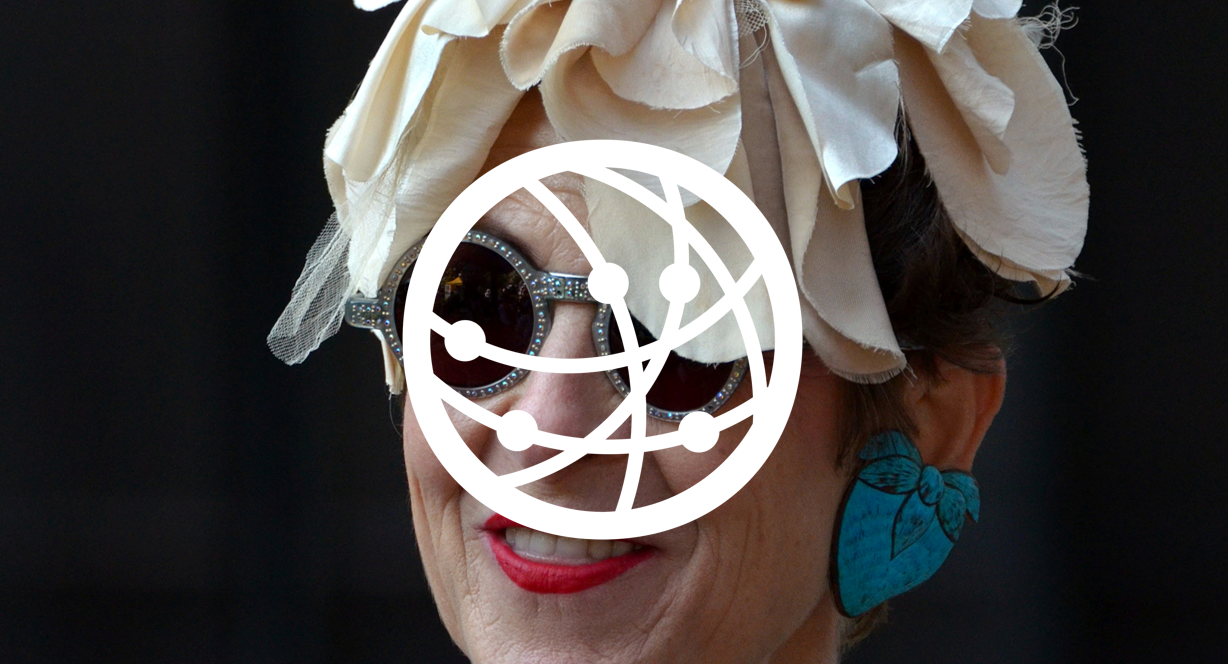
An accessories trend exemplified by Gucci but popular on high street shows too: big, bold, over-the-top and mismatched earrings.


Thanks for reading. Have you spotted any more ethical fashions that fit in with this season’s trends? Let me know on Twitter!


Menswear AW16 trends Eleanor Snare feat

Mens Fashion Trends AW16: Your Essential Guide

Menswear, menswear, menswear. It’s all I’ve been thinking about for the last two weeks. London Collections Men AW16 was Thursday 7th to Monday 11th January and I’ve been busily collecting my favourite looks from the shows over on Pinterest, and scanning through all the backstage snaps over on Instagram.

An important message is next season’s trends are already being worn. Steff Yotka, of Vogue.com:

The season’s stranger trends are already percolating on the streets of London, from bejeweled earrings to cropped fur jackets. The bottom line is that guys are looking to experiment with their fashion choices, and brands have taken notice.

It’s another example of sidewalk and catwalk being closer than we think in the cycle of fashion. But for the majority of consumers, AW16 is still a whole set of holidays away - so read on for your guide to the biggest men’s fashion trends for AW 2016.


COLOURS

Khaki, navy and tobacco

The big three key colours were khaki, navy and tobacco - a sort of rich burnished brown that worked beautifully on shoes, bags and waist belts.

Khaki (unsurprisingly for autumn) popped up everywhere, across all garments, but in a mix of unusual fabrics and without some of the military touches it can have - more often in womenswear, but blokes like an epaulette too. Navy was often used for outerwear while tobacco went from subtle accessories to full caramel-coloured looks.

These three colours aren’t particularly revolutionary for autumn-winter or menswear. Instead, they might’ve been selected in part because they can be worn in a classic style (for example, tobacco brogues) or something more trend-led (like a very wide and baggy dark navy suit).

Bold primary accents

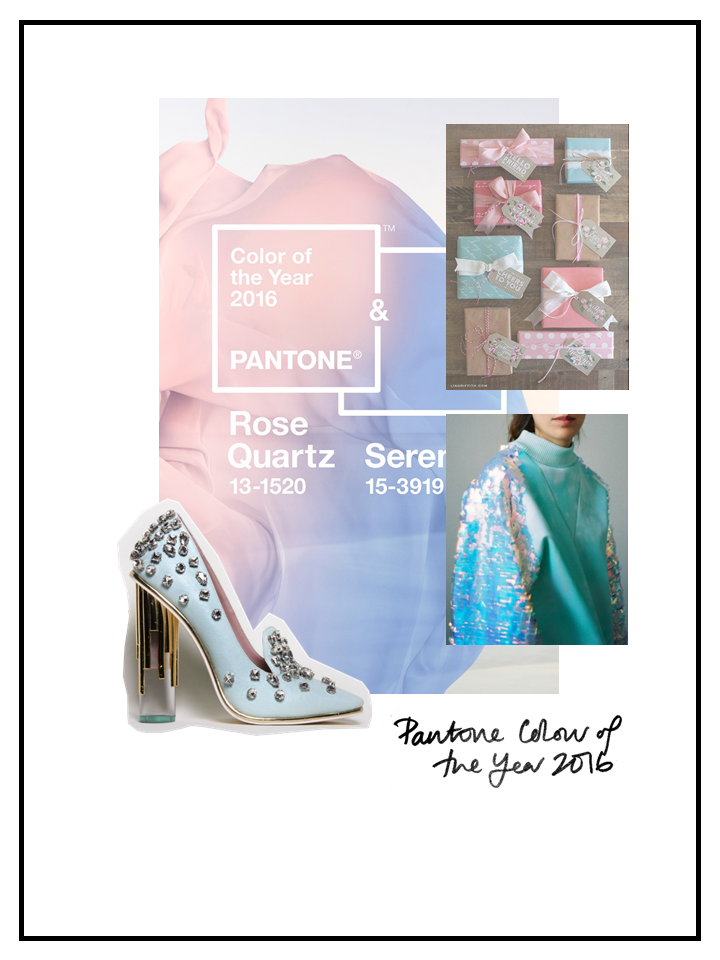
The accent colours were much bolder and violent - plenty of primary colours, primary colour + black, and some dashes of Pantone’s Colour of the Year 2016 combo, Serenity blue and Rose Quartz pink.

ON THE STREET

New York Times Fashion Instagram shot of Tinie Tempah


New York Time Fashion Instagram shot of Darren Kennedy and Jim Chapman

Key colour takeaway

These colours highlight a trend for strong, dominating visions of men with a nod to traditional autumnal colours - or alternatively, with the softer powder shades, something more subtle and potentially androgynous.


MATERIALS

Shearling

If you’re into menswear then you’ll have already had the memo saying “Shearling’s back” in capital letters - and it was. Shearling and teddy bear fur were a big feature for outerwear, but in two extremes: either as accents to leather 70s-style coats, or just all-over full fur in mainly neutral tones like tan, cream and tobacco, rather than shearling linings or anything more traditional.

Teddy bear cropped up in AW15 for womenswear so it’ll be interesting to see whether it’s still hanging about for this year.

ON THE STREET

WGSN Instagram shot at LCM


Evening wear

Evening wear materials, translated into casual and daywear shapes, were another key trend for AW16 menswear. Crushed and striped velvet, flat velvet, organza, satin, metallic PVC and sequins were used for zip-up jackets, trousers, tuxedo jackets and coats in all different colours.

Key materials takeaway

These materials do hook into the continuing 70s trend with more ‘flamboyant’ garments contrasting with the ‘manly’ materials of leather and shearling. But it’s also a way to work out which ‘feminine’ (and often more interesting) bits of fashion can be applied to clothing in a way that’ll be accepted by male-identifying consumers .

SILHOUETTE

Bigger than big

Imagine Patrick Bateman x Happy Mondays: menswear silhouettes were big. Like, really big - huge shoulders, wide slouchy trousers, giant anoraks and puffa jackets, big knits and oversized sleeves. Even the shoes were huge.

There were plenty of layers to add to the feel of ginormous-ness: padded jackets over gilets over jumpers over t-shirts; long tees over shorts over leggings; and wraps of fabric as scarves and waist belts.

Sportswear influenced

The hugeness was also emphasised by sportswear silhouettes, another key theme. Lots of ski references, with overalls and ‘mangarees’ (coined it - nearly), boiler suits, face coverings and big hoods. Other sportswear references including baseball jackets and bombers, simple gym wear like zip-through funnel neck sweaters, and basketball vests + shorts + leggings.

ON THE STREET

New York Times Fashion Instagram shot of Francesco Cuizza

Key silhouette takeaway

It could be a reflection of the size-gain health trend among male-identifying consumers, or the need for layering on a planet where climate patterns are increasingly erratic. There’s a touch of aggression there too - maybe the menswear response to the global security issues I picked up with the SS16 womenswear translucency trend.


Liked this article? You might be interested in these:

Check out The Guardian’s mens fashion trends AW16 round up too for more ideas and insight.

Thanks for reading.
Signature ES2.1


What trends are you excited about in menswear?
Let me know in the comments.


Photographs: Coach menswear AW16 by FirstView via Vogue | Shoe image from DazedFashion Instagram | All menswear images taken from my Pinterest board via GQ.com or London Collection Mens | Shepherd in Morey Plains by Koshy Koshy via Creative Commons | Sequins by girlwparasol via Creative Commons | Glitter found here
The Need to Know Big Fashion Issues of 2016 Eleanor Snare

The Need-to-Know Big Fashion Issues for 2016

The Need to Know Big Fashion Issues for 2016

The Need-to-Know Big Fashion Issues for 2016

The catwalks for 2016 highlighted the relationship between fashion and big, global issues - I picked up on a new type of feminism, new religiously-motivated consumers, and clothing as representing the fragile global security we’re experiencing.

These issues will continue to influence designers over the next twelve months, but what about fashion businesses and their customers? Let’s get a little Mystic Meg and predict the future: read on for the need-to-know big fashion issues for 2016 and a snapshot of how they might affect your work and fashion habits.

The Need to Know Big Fashion Issues for 2016 - Eleanor Snare

#1 SUSTAINABILITY

Do consumers really care about the sustainable credentials of their clothes? Mark Sumner, previously Sustainable Raw Material Specialist with Plan A at M&S and now my colleague at the University of Leeds, often cites research from the high street giant showing consumers put ethics and sustainability at the top of their ‘requirements’ list when questioned.

But when it gets to point of purchase, ethics drops right down below price, quality and brand. Not surprising, but why is sustainability such a buzzword?

In part because newer generations of consumers look like they might care more deeply about where fashion is coming from and, importantly, how fashion businesses are operating sustainably. Lucie Greene, in Harriet Quick’s article for Wallpaper*:

Millennials are expecting more than ever from brands, and they’re increasingly starting to lead in the luxury space, causing a need for luxury to pivot to appeal to them … They expect hyper-transparency, ethical behaviour, sustainability and values from the brands they consume.

In 2016, business operations will need to be sustainably-managed too, from dealing with energy shortages to your PR and marketing teams handling ‘greenwashing’ claims. Across finance, marketing, consumer behaviour and day-to-day working life, 2016 will be the year we truly start to feel the pull of sustainability.

The Need to Know Big Fashion Issues for 2016 - Eleanor Snare

#2 FOCUS

As of August last year, four-year-old Instagram had racked up over 25 million images with the hashtag #fashion, fashion brands were some of the top advertisers on the platform, the numbers of hours we spend watching YouTube videos increased by 60%, and we all started going a bit barmy over the potentials of rapid Snapchat+fashion. James Kirkham, global head of social and mobile at Leo Burnett:

The future of advertising looks like this, and it is bloody glorious. Hardly anyone in ad land has ever used Snapchat, let alone gets its potential … the excellence of this campaign is its insistence to create and leverage ‘urgency’ in the audience. In a time when appointment to view is increasingly hard, where consumption is more difficult to achieve through proliferation of choice, this feeling of urgency is a new secret weapon.

At the same time, stress-reducing colouring in books were some of the most popular non-fiction purchases of the year, searches for ‘wellbeing’ and ‘mindfulness’ increased rapidly and at least one high profile blogger ditched social media for something more wholesome (apparently). Consumers are looking to slow down or streamline, but fashion can’t stop speeding up.

So 2016 will be the year of focus for fashion brands (and maybe individuals too). Marketing spend is wavering and teams are stretching resources across multiple channels with negligible ways of measuring benefit. This year brands will pull back and focus attention on core communication channels - maybe not even social media - and long-term, narrative-driven, personalised marketing.

The Need to Know Big Fashion Issues for 2016 - Eleanor Snare

#3 GLOBAL CONSUMERS

The fashion industry is collecting more data than ever about its customers, as ASOS’ 2014 financial report shows, or as BoF highlighted in their special report on Inditex’s incredible tech silo. Brands are getting better at segmenting data and - in many cases - serving up the right stuff to the right people.

But our consumer groups are rapidly evolving too. The Pew Research Centre predicts Islam will be the fastest-growing religion in the world over the next 25 years, giving the fashion industry a new, and unique, set of customers. Caitlyn Jenner became the first transgender woman on the cover of Vanity Fair and Pantone announced a 2016 colour that blended two culturally-gendered shades into one.

World migration and forced displacement are reconstructing societies; in 2014, the number of people moving due to forced displacement rose by 8.3 million. Antonio Guterres, the UN High Commissioner:

We are witnessing a paradigm change, an unchecked slide into an era in which the scale of global forced displacement as well as the response required is now clearly dwarfing anything seen before.

Businesses (fashion or not) have whole new consumer groups to deal with and, in a few years time, a new generation of young customers who will be products of two or more cultures, with a mentality similar to the Baby Boomers of post WWII.

All this means that, in 2016, fashion business will start to develop highly specific consumer profiles based on dependable, longitudinal data. Brands will emerge catering to those consumers appearing on the ‘edges’ of existing demographics. You’ll be asked to put your customer’s world under a microscope, which could mean enlisting the help of people trained in anthropology, ethnography and cultural studies who’re able to dissect the unique circumstances surrounding these global consumer groups. And you’ll need to articulate your customer profile in much more detail - physical, emotional, spiritual and psychological - than ever before.

The Need to Know Big Fashion Issues for 2016 - Eleanor Snare

#4 PERSONALISATION

As consumer groups become more niche so to does our interest in personalised information. The flavour of neo-liberalism can be tasted across every sphere of life, heavily influencing our ideas of the individual as entrepreneur, as unique, as isolated, or as ‘special’ (just for existing).

Fashion brands have dabbled in personalisation for decades. A recent example spawning plenty of copies was Burberry’s monogrammed ponchos and scarves from 2014 and 2015. Widespread personalisation in 2016 will mean more brands creating simpler ‘mix and match’ product personalisation options - like Nike’s build your own trainers or Ferragamo’s build your own classic shoe - but also developing services, marketing and content tailored to individuals.

Rather than personalisation purely being associated with high-end brands, 2016 will see middle-range fashion businesses echoing the service levels of independents with the consistency of luxury names at every customer touch point. As social platforms develop their marketing algorithms, consumers are more likely to be served relevant content, so the in-store or on-paper experience will need to reflect this.

The trick for fashion brands will be creating cohesive campaigns which can be highly-individualised and yet part of a greater whole. You might need to re-train shop staff in personal service skills, ramp up your customer response teams as a whole, or dedicate team members to developing ‘personal marketing’ tactics - from hand-written thank you notes to email newsletters where content segments are swapped depending on the recipient.


Over the next year I’ll be writing on each of these issues in turn, delving deeper into why they’re important in 2016 and how you can work with them, rather than against them.

Thanks for reading.

Signature ES2.1


Are there any big issues you think I’ve missed?
Let me know in the comments.


Photographs: [space] by NASA via Unsplash | [leaf] by Joe Wroten via Unsplash | [river] by Leo Rivas-Micoud via Unsplash | Freckles by Frédéric Poirot via Creative Commons | Tourist - Fashion - Santa Fe Indian Market by Larry Lamsa via Creative Commons | Icons found via Creative Commons and edited | All images available for non-commercial re-use license with credit
PANTONE-Color-of-the-Year-2016

Four Interesting Things about Pantone Color of the Year 2016

Pantone Colour of the Year 2016 - Eleanor Snare

Today Pantone announced its Colour of the Year for 2016. In 2014 this was the much-shared Radiant Orchid; this year it was Marsala, a plummy-brown which you will have noticed especially in the beauty sector.

For the first time ever Pantone’s Colour of the Year isn’t one shade, but a gradient of two: a dusky pastel pink called Rose Quartz and a pale pastel blue, Serenity.

As someone interested in the big movements behind trend-spotting and colour prediction, here are my top four messages gleaned from Pantone’s choice.

1. It’s made for digital influencers and content creators

This isn’t mentioned in Pantone’s reasoning, but Rose Quartz & Serenity is a colour made for the latest generation of digital influencers and content creators. The gradient echoes a natural colour combination you’ll see at sunset or dawn, making it an ideal application in visual social media - photo-editing app Aviary have already released two Pantone filters and Pixlr already has a range of pink-blue gradient filters and overlays.


These shades are also a mainstay of lifestyle and fashion blog design, Pinterest accounts and Instagram images. So while the combination may be radical for Pantone, the execution is already happening: recent trends of pastel, ombre hair, the popularity of soft-hued kawaii Facebook stickers like Pusheen, the slew of inspirational Pinterest quotes.


That’s how colour prediction works - by scoping what’s happening and making a judgement on what’s next - but in this instance the transition from conceptual Colour of the Year to actual colour of the year, used across multiple channels and spearheaded by digital influencers, will be quicker than ever. And hey, Rose Quartz? The title sounds like a blogger’s dream: the Michael Kors Rose Gold watch + borax crystal quartz DIY.


2. It’s about wellness, not gender

The natural mega trend to extrapolate from the Rose Quartz & Serenity pairing would be the blurring of gender divisions in many countries across the world; the gradient represents, perhaps, the change in perception of gender roles and a more fluid approach to colour expression.


However, Laurie Pressman, VP of the Pantone Colour Institute, in a webinar on the Colour of the Year, was sure to explain that wellness was the main driver behind this selection, not gender. She mentioned that consumers and creators are taking “a more unilateral approach to colour” when it comes to gender, but the drive for wellbeing and “the need for reassurance…a desire to quiet our minds” was more important.

Pressman argued that the Colour of the Year “embodies the mindset of tranquility and peace consumers seem to be looking for”:

[Rose Quartz] is warm and embracing…[Serenity] is weightless and airy…they give comfort in turbulent times…[They are] feel good, comforting shades.

Pastel shades are more likely to have a calming effect on us partly for cultural reasons but also because they are desaturated - they don’t have a strong pigmentation so are ‘easy on the eye’. So while Rose Quartz & Serenity might happily tap into movements in gender identity and fluidity, the colour is more a reflection of the desire for “tranquility and peace” evident in consumer habits.


3. It’s not artificial, but it feels like it

This pink-blue gradient does occur naturally; during sunset and sunrise the sun’s rays and the darker night sky merge to form unusual colour pairings. However, taken separately - and even the artifical gradient of Rose Quartz & Serenity seen on screen - the colours feel very artificial.


These don’t feel like naturally occurring colours. They’re too sugary, a little bit cool, a bit more like sugared almonds at a wedding than their natural counterparts. It’s likely these shades would appear in certain flowers and weather patterns, but to me the immediate reminder was of Germolene and a particularly unflattering bridesmaid’s dress I once wore.


Maybe these plasticky colours are meant to reflect an emerging technology in homewares and fashion - the rise of 3D printed objects made out of plastics. Or maybe it’s all about my final point…


4. It’s naive - which makes us feel better

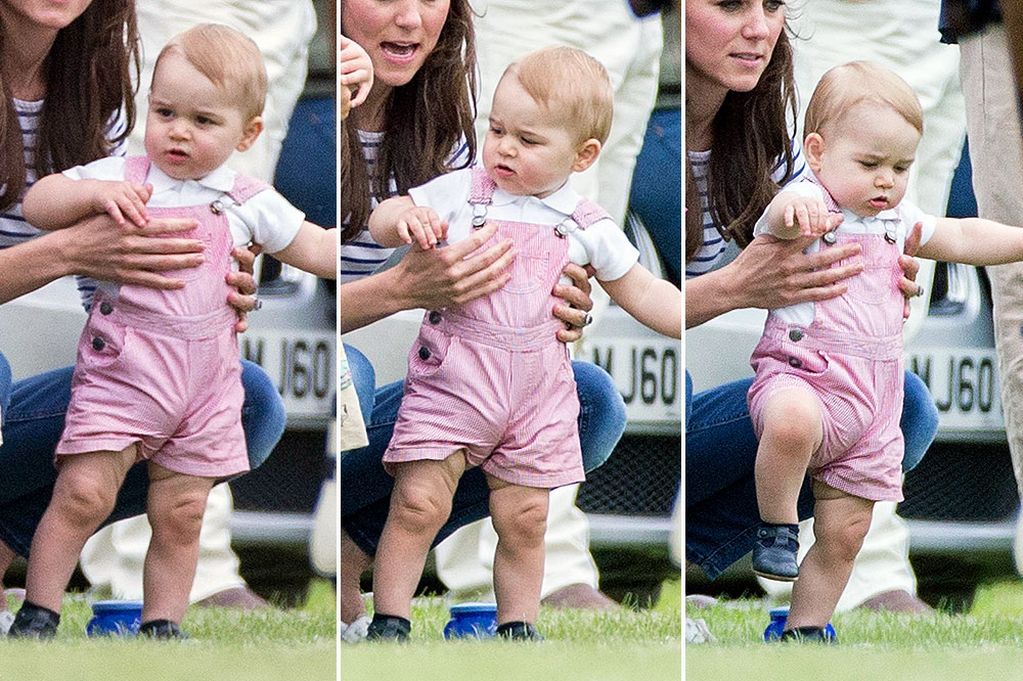
As Time points out, these are “conventional baby colours”. And their position as baby colours means they have a clear, almost subconscious effect on us; they soothe and calm us because when we were too small to remember, they did the same job.

Pantone_Color_of_the_Year_2016_shop_Pantone_Swatch_Cards


Prince-George-at-the-polo-wearing-pink-dungarees

In her webinar, Pressman noted that it wasn’t until after WWII that pink and blue really came to be gender signifiers, especially for babies and children. She also noted that the baby boomer generation - those born after WWII - is a key driver in the wellness movement. So a big (and rich) consumer group who wants to feel calm and tranquil now is very likely to have felt calm and tranquil with these same colours as children.

Pressman explained that “these shades have the ability to transform us into a world of play…a way to escape” - in the same way that naivety and innocence give us an opportunity to remove ourselves from the ‘real’ world. The shades of Rose Quartz and Serenity are typical baby colours, so is this about being swaddled and coddled, protected from reality?


The infantilisation of lifestyles is an interesting concept and it could be that Rose Quartz & Serenity is playing straight into it. While it could be argued it’s working with gender fluidity, it could easily be seen as a way to determine men, women and any gendered people as fragile beings rather than strong agents of their own destiny. Could this be a step backward, for women in particular?

I think with all the craziness in the world, aside from soft we’re looking for pretty.

Pantone’s excellent webinar traced some of the background of pink, from it’s gender neutrality pre-WWII to Elsa Schiaparelli’s “shocking pink” to the ‘protest pink’ used by those pushing against outdated gender values. My thought on pink’s history? To now have baby pink and baby blue as next year’s colour when we’ve seen the rise of a pink so bold it started to be a political message feels a bit disappointing.


Learn more about Pantone Color of the Year 2016 on their website and tweet me your thoughts. You can also follow me on Pinterest - just click on my profile below.

Liked this article? You might be interested in these:


SS16 Womenswear Trend Translucency Eleanor Snare feat

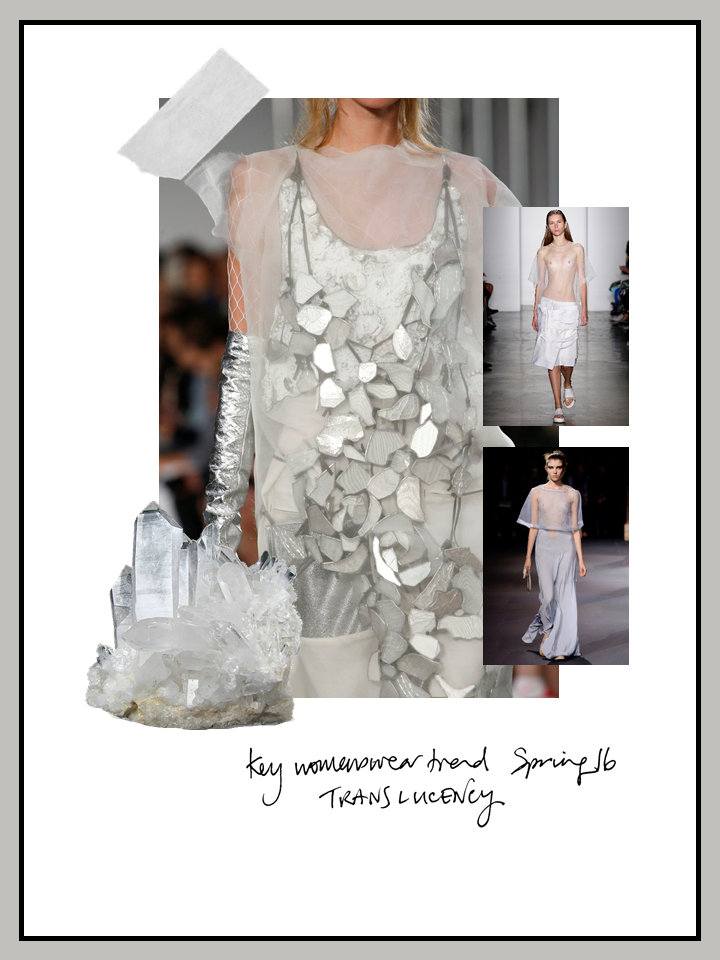
SS16 Womenswear Trend: Translucency

SS16 Womenswear Trend - Translucency - Eleanor Snare

In my last article I explored a key SS16 womenswear trend, the triangle silhouette. This time I’ll be looking at translucency, which featured in a number of shows in stripes, bands, ruffles and frills.

SS16 Womenswear Trend Translucency by Eleanor Snare


SS16 Trend: Translucency

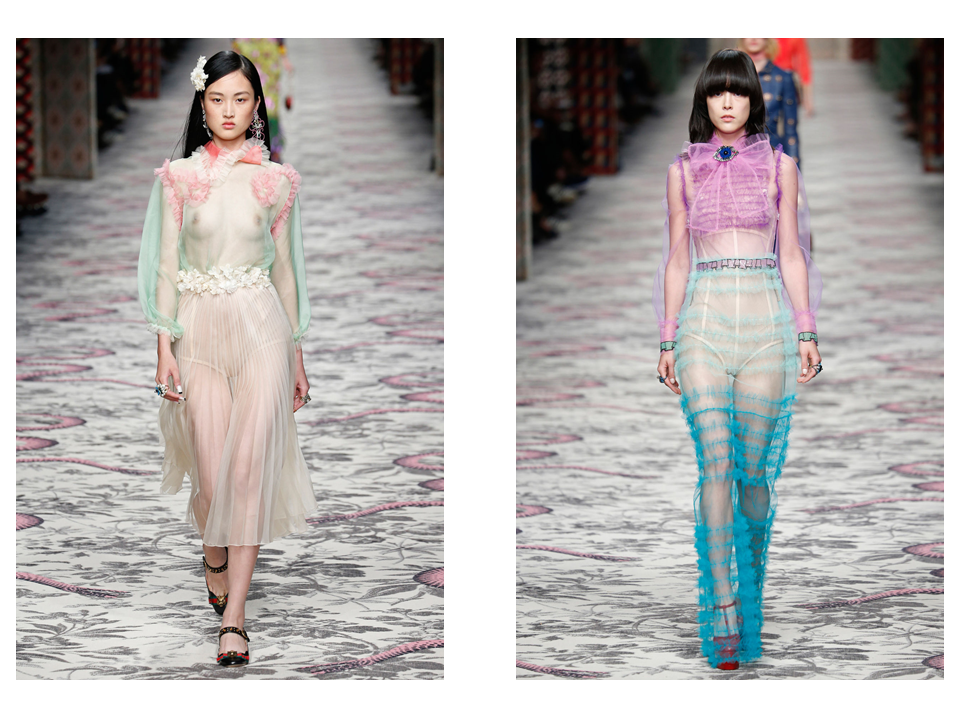
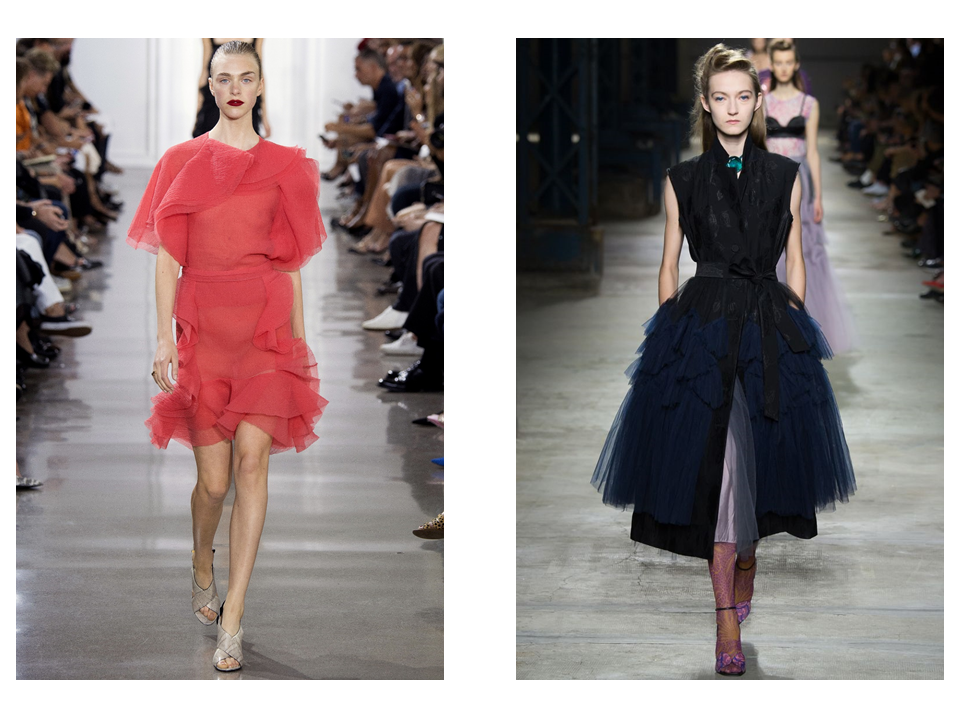
There were translucent fabrics used in nearly all of the shows I scanned through (about 50 in total). Their application included banded maxi dresses at Burberry Prorsum, tightly-packed ruffles at Jason Wu, and gradient-hued at Gucci.

SS16 Womenswear Trend - Translucency - Eleanor Snare
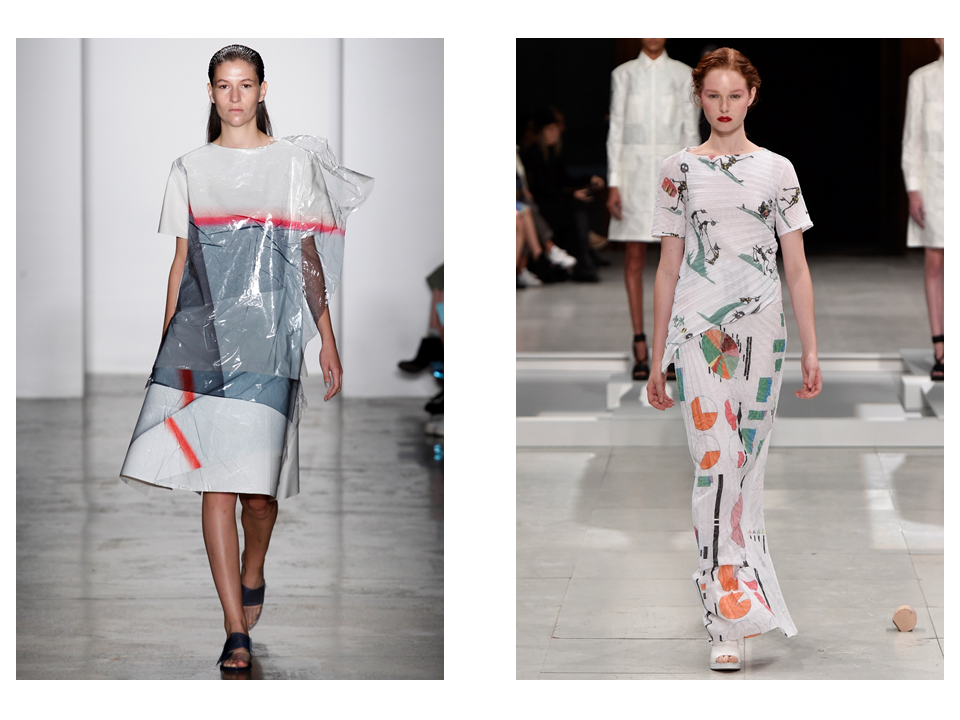
Parsons MFA SS16 ready to wear (look 26) and Chalayan SS16 ready to wear (look 25)

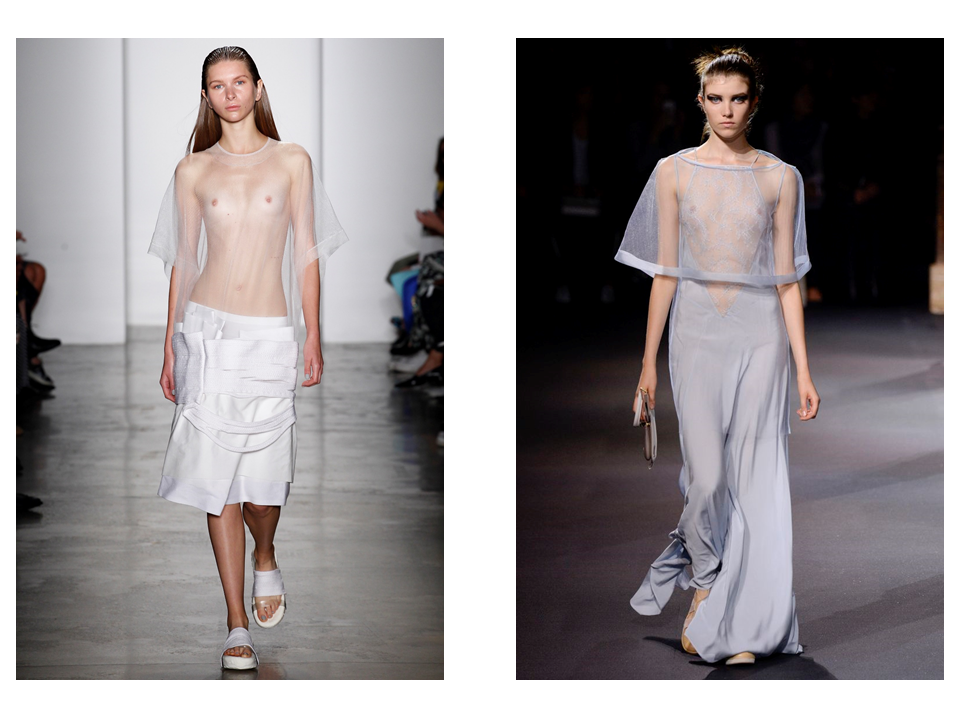
Translucent fabrics can be beautiful when used in particular shades and cuts - and a bit trashy when they’re not. While a translucent fabric can cover the body completely, it simultaneously reveals it. This balance of visibility/invisibility is a key factor of translucent fabrics of all opacities, from the transparent plastics of Parsons MFA to the almost opaque printed textiles of Chalayan.

SS16 Womenswear Trend - Translucency - Eleanor Snare
Gucci SS16 ready to wear (looks 6 and 57)

Exploring the triangle

Historically, translucent fabrics evoke a host of images: tulle elements of 1950s ballgowns, clear plastic macs of the 60s and bodycon meshes of the 80s (or Strictly Come Dancing). Plus there’s all the wafting, ethereal images of 1920s and 30s women in elegant layers, swathed in delicate cotton - versus futuristic executions of Barbarella-meets-Courreges visors, skirts and jackets. Translucent garments across time have a strange hidden power: they feel ‘functionless’ because they’re barely there, yet can be waterproof, warm and protective.

SS16 Womenswear Trend - Translucency - Eleanor Snare
Damir Doma SS16 ready to wear (look 9) and Burberry Prorsum SS16 ready to wear (look 27)

Translucent fabrics cover and uncover; they veil and unveil. They’re sexually charged, because you can see everything and yet it’s fuzzy, hidden, mysterious. Some of the translucent fabric applications for SS16 reminded me of my friend Het’s brilliant Pinterest board, where she collects images of transparent materials used in clothing and accessories. Translucent fabrics are like blister packaging for the body: everything is on display but nothing can be obtained until you pop the cover off.

Practically, translucent fabrics based on natural fibres with a very fine weave or sportswear materials (like mesh) are useful in hot weather, as they allow the body to be covered and yet remain cool. They can also be layered in a visually interesting way and, depending on their construction, to help regulate temperature.


SS16 Womenswear Trend Translucency by Eleanor Snare Macro trends


Climate responsive

Changes in the global climate are already having an impact on fashion retail, disruption the traditional pattern of when new season garments go into store. However, it’s also getting designers to reconsider how they can conceive garments which work for a variety of weathers.

Translucent fabrics can be layered effectively, so for hot weather we can wear them with nothing underneath and equally, in cold weather, can layer them up and they still maintain their uniquely delicate and feminine quality. While they might not seem like all-weather garments, they are.

Plus, this mixing of textures and ‘registers’ of garments (a translucent chiffon evening blouse with an everyday t-shirt, for example) plays very well into the high-low dressing trend and general bricolage of modern consumers.

SS16 Womenswear Trend - Translucency - Eleanor Snare
Aquilano.Rimondi SS16 ready to wear (look 24) and Gabriele Colangelo SS16 ready to wear (look 13)

Fragility/security

Like Snow White in her glass coffin, totally secure and yet at any moment surrounded by dangerous shards, I see the use of translucent materials as trying to capture some of those confusions around the current fragile/secure global mentality.

Our political and military security is tighter and more insidious than ever, yet our sense of fragility - that something could be broken - continues to grow as we absorb fragments of terrifying information from multiple sources.

Using translucent fabrics give designers an opportunity to protect and clothe the body but in a seemingly ‘weak’ way, exposing fragility (the skin and body itself) while still being securely covered.

Snow White’s glass coffin was designed for everyone to see her beauty, but be unable to get near to her. In a similar way translucent fabrics could be seen as a shield, protecting bodies from aggression but allowing their beauty to be gazed upon.

SS16 Womenswear Trend - Translucency - Eleanor Snare
Parsons MFA SS16 ready to wear (look 16) and Vionnet SS15 ready to wear (look 10)

‘New’ eroticism

Translucent fabrics have been used for centuries as a sexually-charged component of women’s dressing, so there’s nothing new about using them for SS16 to denote eroticism.

However, it is in contrast to previous incarnations of sexual allure on the catwalk. It’s less retro than nu-New Look corsetry, less macho than 90s grrrls revisited, less traditional than Ralph Loren’s suiting or Diane Von Furstenburg’s wrap dresses.

SS16 Womenswear Trend - Translucency - Eleanor Snare
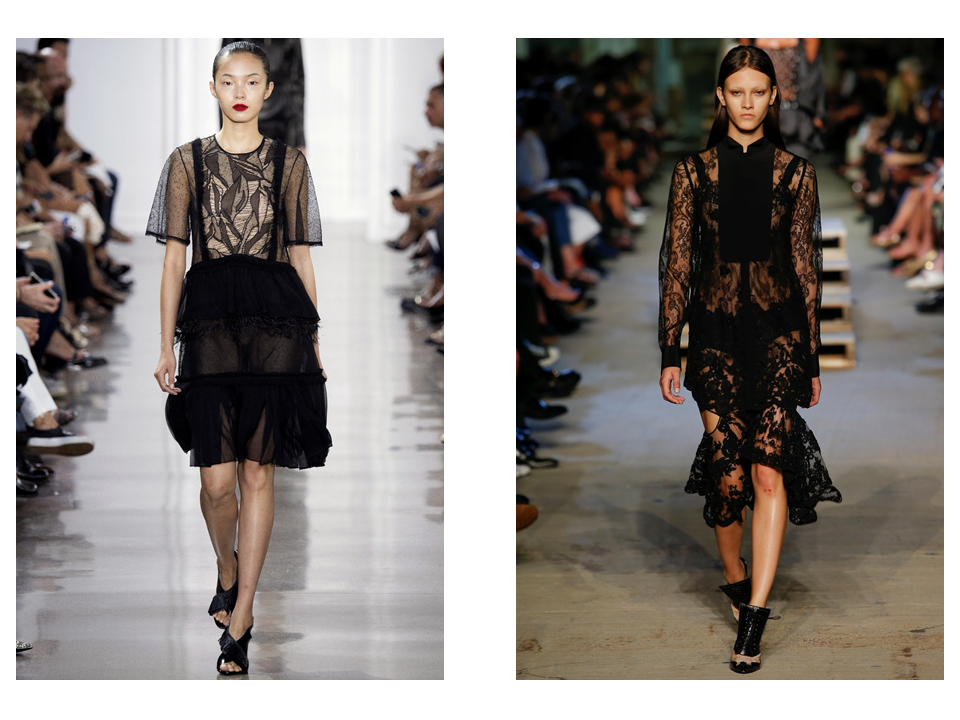
Alexander McQueen SS16 ready to wear (look 11) and Givenchy SS16 ready to wear (look 44)

Translucent fabrics are challenging as erotic signifiers, because they protect and expose - you can look but you can’t touch. I see this as connected to the way women want to be looked at (as part of the new movement in feminism) and trying to control that gaze more effectively.

And to mention it again, the emergence of strong Muslim women as a consumer group is important here. The veil and the covered body are seen by many as an integral part of Islamic teachings, and have naturally developed their own sexual charge (because whatever women wear, anywhere, there will be sexual charge associated with it).

Potentially the use of translucent fabrics is a way to explore new ways of thinking about eroticism: a more controlled gaze, a stronger acceptance of fragility, an acknowledgement of how what you can’t see is as sexually powerful as what you can.

SS16 Womenswear Trend - Translucency - Eleanor Snare
Jason Wu SS16 ready to wear (look 26) and Givenchy SS16 ready to wear (look 75)

Frou-frou feminism

In the last trend article, where I explored the base down triangle, I mentioned how this strong shape could be a response to new forms of feminism: stronger and more accepting of the disruptiveness in the movement and in women.

Similarly, the trend for translucent fabrics has a relationship with new movements in feminism. The application of translucent fabrics for SS16 included minimal touches in blocks or stripes, but also a range of ‘frou frou’, super-fussy applications. Translucent fabrics were packed into tight layers of ruffles, in flounces across the body, in double ruffles with raw edges, and in paperbag waistlines.

SS16 Womenswear Trend - Translucency - Eleanor Snare
Jason Wu SS16 ready to wear (look 31) and Dries Van Noten SS16 ready to wear (look 57)

The fastidious application of typically ‘feminine’ details was often on garments with more ‘masculine’ colour palettes and shapes, as if the two genders were colliding. This could be another indicator of designers working out the desires of new feminist consumers: translucent fabrics allow for ‘feminine’ fragility and ‘masculine’ strength depending on their application.

There’s also a feeling designers are trying to reclaim frou-frou for women. Some trends which are symbols of girliness (for example, pigtails or frilly ankle socks) are rejected by an 18+ consumer because of their pre-adolescent connotations. But the idea of frou-frou - of flounces, frills, pastels, ribbons and fussy details - could work for those adult consumers when used in contrasting colour palettes and with stronger silhouettes. If the newest feminism is about accepting diversity, then part of that must be accepting you can enjoy ‘girly’ clothes and still be a complex and self-contained woman.

SS16 Womenswear Trend - Translucency - Eleanor Snare
Ashish SS16 ready to wear (look 15) and Noir Kei Ninomiya SS16 ready to wear (look 3)

References
Feature image: Pucci, G. 2015. Untitled (Maison Margiela SS16 Ready to wear look 5 detail). Online. [Accessed 23 November 2015]. Available from: http://www.vogue.com/fashion-shows/spring-2016-ready-to-wear/maison-martin-margiela/slideshow/details#5
Indigital. 2015. Untitled (Gucci SS16 Ready to wear look 6). Online. [Accessed 19 November 2015]. Available from: http://www.businessoffashion.com/fashion-week/2016ss/gucci/collection/look/6
Indigital. 2015. Untitled (Gucci SS16 Ready to wear look 57). Online. [Accessed 19 November 2015]. Available from: http://www.businessoffashion.com/fashion-week/2016ss/gucci/collection/look/57
Vlamos, Y. 2015. Untitled (Jason Wu SS16 Ready to wear look 31). Online. [Accessed 19 November 2015]. Available from: http://www.vogue.com/fashion-shows/spring-2016-ready-to-wear/jason-wu/slideshow/collection#31
Vlamos, Y. 2015. Untitled (Jason Wu SS16 Ready to wear look 26). Online. [Accessed 19 November 2015]. Available from: http://www.vogue.com/fashion-shows/spring-2016-ready-to-wear/jason-wu/slideshow/collection#26
Pucci, G. 2015. Untitled (Damir Doma SS16 Ready to wear look 9). Online. [Accessed 19 November 2015]. Available from: http://www.vogue.com/fashion-shows/spring-2016-ready-to-wear/damir-doma/slideshow/collection#9
Pucci, G. 2015. Untitled (Aquilano.Rimondi SS16 Ready to wear look 24). Online. [Accessed 19 November 2015]. Available from: http://www.vogue.com/fashion-shows/spring-2016-ready-to-wear/aquilano-rimondi/slideshow/collection#24
Arnold, Weston K. 2015. Untitled (Gabriele Colangelo SS16 Ready to wear look 13). Online. [Accessed 19 November 2015]. Available from: http://www.vogue.com/fashion-shows/spring-2016-ready-to-wear/gabriele-colangelo/slideshow/collection#13
Feudi, M. 2015. Untitled (Givenchy SS16 Ready to wear look 75). Online. [Accessed 19 November 2015]. Available from: http://www.vogue.com/fashion-shows/spring-2016-ready-to-wear/givenchy/slideshow/collection#75
Feudi, M. 2015. Untitled (Givenchy SS16 Ready to wear look 44). Online. [Accessed 19 November 2015]. Available from: http://www.vogue.com/fashion-shows/spring-2016-ready-to-wear/givenchy/slideshow/collection#44
Tondo, M. 2015. Untitled (Burberry Prorsum SS16 Ready to wear look 27). Online. [Accessed 19 November 2015]. Available from: http://www.vogue.com/fashion-shows/spring-2016-ready-to-wear/burberry-prorsum/slideshow/collection#27
Indigital. 2015. Untitled (Ashish SS16 Ready to wear look 15). Online. [Accessed 19 November 2015]. Available from: http://www.vogue.com/fashion-shows/spring-2016-ready-to-wear/ashish/slideshow/collection#15
Vlamos, Y. 2015. Untitled (Dries Van Noten SS16 Ready to wear look 57). Online. [Accessed 19 November 2015]. Available from: http://www.vogue.com/fashion-shows/spring-2016-ready-to-wear/dries-van-noten/slideshow/collection#57
Ninomiya, Noir K. 2015. Untitled (Noir Kei Ninomiya SS16 Ready to wear look 3). Online. [Accessed 19 November 2015]. Available from: http://www.vogue.com/fashion-shows/spring-2016-ready-to-wear/noir-kei-ninomiya/slideshow/collection#3
Tondo, M. 2015. Untitled (Parsons MFA SS16 Ready to wear look 26). Online. [Accessed 19 November 2015]. Available from: http://www.vogue.com/fashion-shows/spring-2016-ready-to-wear/parsons-mfa/slideshow/collection#26
Tondo, M. 2015. Untitled (Parsons MFA SS16 Ready to wear look 16). Online. [Accessed 19 November 2015]. Available from: http://www.vogue.com/fashion-shows/spring-2016-ready-to-wear/parsons-mfa/slideshow/collection#16
Tondo, M. 2015. Untitled (Alexander McQueen SS16 Ready to wear look 11). Online. [Accessed 19 November 2015]. Available from: http://www.vogue.com/fashion-shows/spring-2016-ready-to-wear/alexander-mcqueen/slideshow/collection#11
Yannis, V. 2015. Untitled (Chalayan SS16 Ready to wear look 25). Online. [Accessed 19 November 2015]. Available from: http://www.vogue.com/fashion-shows/spring-2016-ready-to-wear/chalayan/slideshow/collection#25
Yannis, V. 2015. Untitled (Vionnet SS16 Ready to wear look 10). Online. [Accessed 19 November 2015]. Available from: http://www.vogue.com/fashion-shows/spring-2016-ready-to-wear/vionnet/slideshow/collection#10

PIN THIS:

SS16 Womenswear Trend - Translucency - Eleanor Snare