
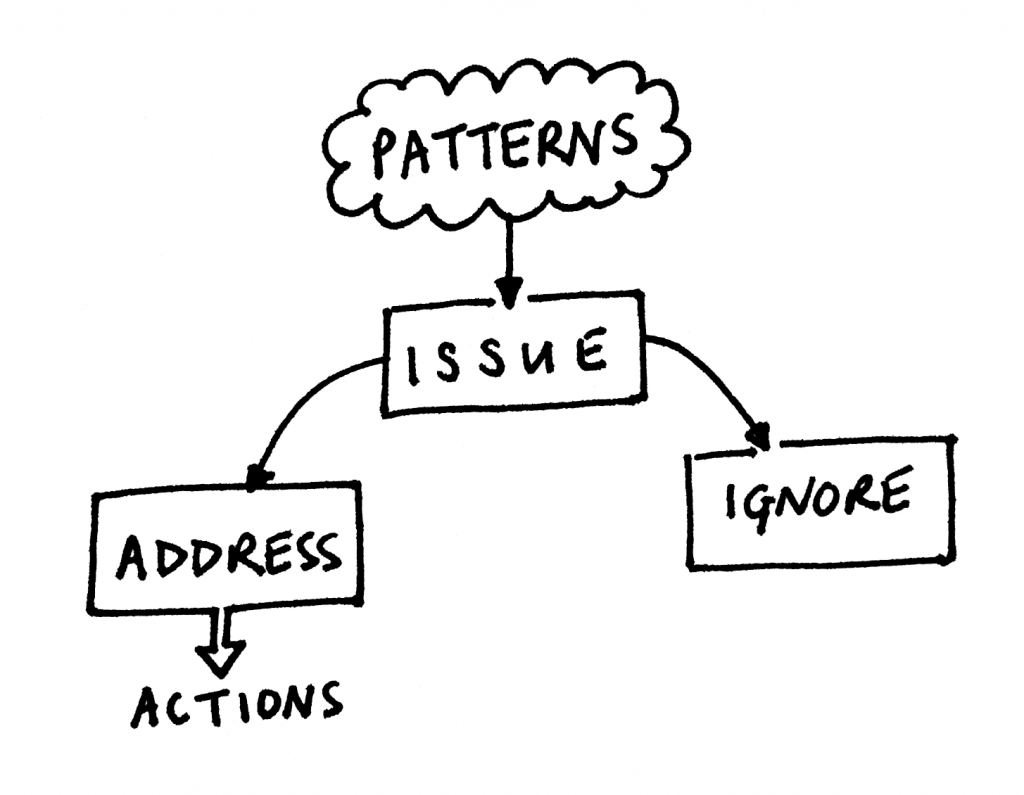
 Back to the imaginary wearable. After you realise this issue with your colleague, your wearable can offer you two options: ignore or address.
Choose address and you’ll be guided through actions to help manage the stressful symptoms (like deep breathing exercises) and actions to help discover and manage the cause (like the ‘five whys’). Choose ‘ignore’ and you won’t have to do anything.
It’s important to have the ability to ignore something that’s ‘wrong’ with you. Therapeutic actions work when we want them to work; you can’t force them. Current wearables focusing on treating the ‘symptoms’ of imperfect humanity (Run faster! Sleep better! Eat healthier!) avoid looking at the causes, some of which might be painful or difficult.
Managing causes needs long term commitment from the individual, and that can be too much right now. A mindful wearable could bring the issue into the light, and then give you an educated choice about whether to address or ignore it – not avoid the issue completely by focusing purely on the symptoms.

Wearables have such potential in helping us see the health of our bodies in a way humans crave, through logic, data, patterns and symptoms. But mindfulness has the potential to heal our bodies and brains too, through clarity, awareness, causes and being present.
Combining the two could be incredibly powerful and commercially successful. It could, finally, move wearables from the niche market of luxury purchasers and gadget lovers into the real mainstream: technology which helps us understand ourselves comprehensively, from the inside out.
One thought on “Could mindfulness take wearables mainstream?”