Wearables aren’t hitting the mainstream like we thought they would.
Despite one of the most heavily-marketed tech companies entering the market, and prices of some wearables becoming more affordable, they’re still not becoming an everyday item.
Maybe wearables aren’t working because they’re being designed contrary to one of the most significant lifestyle trends in recent years: mindfulness.
Mindfulness is a physical and emotional practice designed to help you feel more accepting and non-judgmental. It’s combines meditative and cognitive techniques, physical exercises like yoga, mindful eating, verbal affirmations and other small actions of awareness.
Mindfulness encourages the ability to be present: being awake and aware in your physical body and mind at a present moment in time. The starting point is physical awareness, which leads to mental awareness. For example, the guided meditations of Headspace, a phenomenally popular mindfulness app, start by focusing on your physical feelings then moving onto your emotional feelings.
This is a lifestyle trend, popularised through infographics, lifestyle bloggers and Pinterest quotes, but it’s also a scientifically-approved way of being. It’s slowly being recognised by organisations like the NHS as an effective mental health practice, shown to treat certain types of recurring depression and it’s being used in schools to help children develop resilience from a young age.
But in wearables, one of the most exciting technological developments of our time, it’s noticeably absent.
 Wearables collect data about you when you wear them: your heartbeat, sweat production, brain waves and where you are. Lots of wearables are designed around self-improvement, using the data they collect to recommend programmes which help you run further, sleep better or lift more. Alternatively, they help you work more efficiently, enabling you to “do familiar things more quickly and conveniently“.
The data a wearable collects is incredibly valuable, and the technology can help individuals feel better about themselves through striving for and achieving personal goals.
But absent from the brilliance of wearables is the benefit of mindfulness.
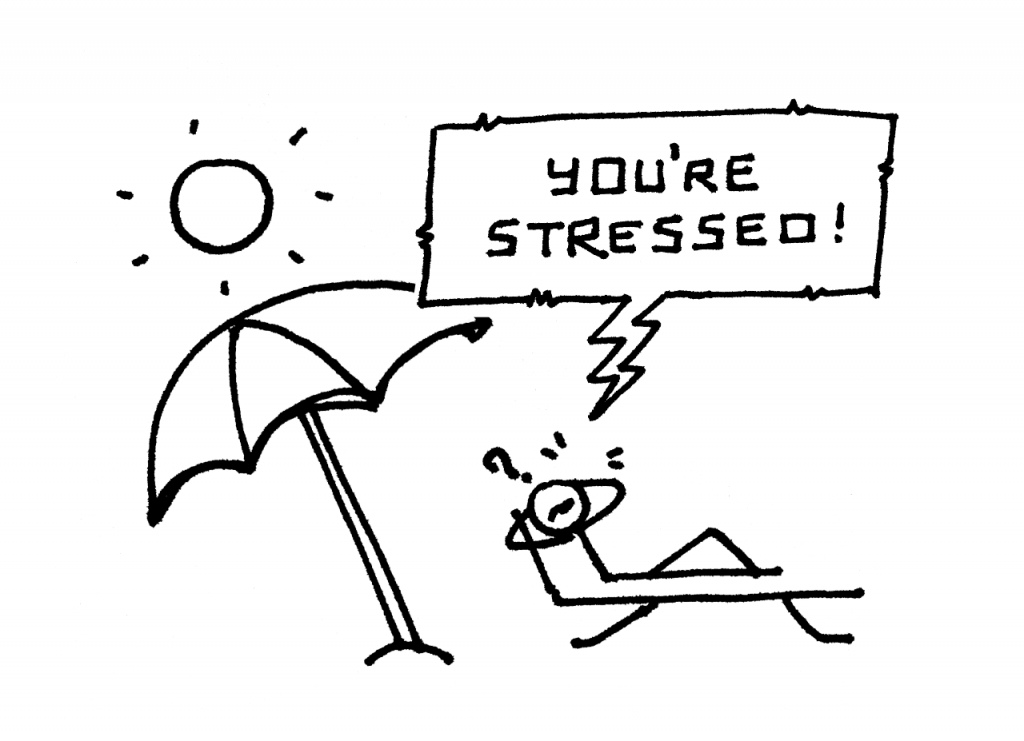
Here’s an example: this wearable product is designed to let someone know when they’re feeling anxious by monitoring their breathing other physical factors. It alerts you when you’re stressed, then recommends an action, like going for a walk, to combat this symptom.
Rather than encourage mindfulness as a method of diagnosis – being present in your body and recognising the signs of stress, like headaches, shoulder tension or shallow breathing – the product will diagnose when you’re stressed.
Instead of relying on awareness of ourselves as individuals, we start relying on the knowledge of a machine.
 Wearables aren’t ineffective; they’re unfinished. It’s exciting to think about what wearables could achieve if they were built around mindfulness as well as scientific data collection, and the positive impact they could have. Crowdfunding is helping make those ideas a reality: for example, Olive syncs with your calendar to track activity alongside physical stress reactions.
Imagine, instead of the wearable that vibrates when you’re stressed, a wearable that asks you questions through the day – little prompts to check how you’re feeling. These prompts aren’t hard; it’s what current mindfulness or happiness apps do through push notifications. Your wearable regularly asks you what’s going on and how you feel, then collates the information alongside physical data.
After two weeks of recording, you look at the charts and see unusual activity at a similar time every day; your heart rate and breathing exhibit signs of stress, and your charted feelings include words like ‘worried’, ‘nervous’ or ‘angry’. You check the activity log and there’s the answer: every day you see a colleague who winds you up, and every day your physical and emotional data shows a reaction.
It might sound too obvious a situation to be built into advanced technology – of course you’ll know that colleague pisses you off. But why does it happen?
A perceptive friend will be able to point out a problem we just can’t see, despite feeling the symptoms very strongly. Medical professionals help us find causes of symptoms that are alien to us, even when we intimately understand the effects. The right, mindful wearable can do the same, and help us work on those causes.
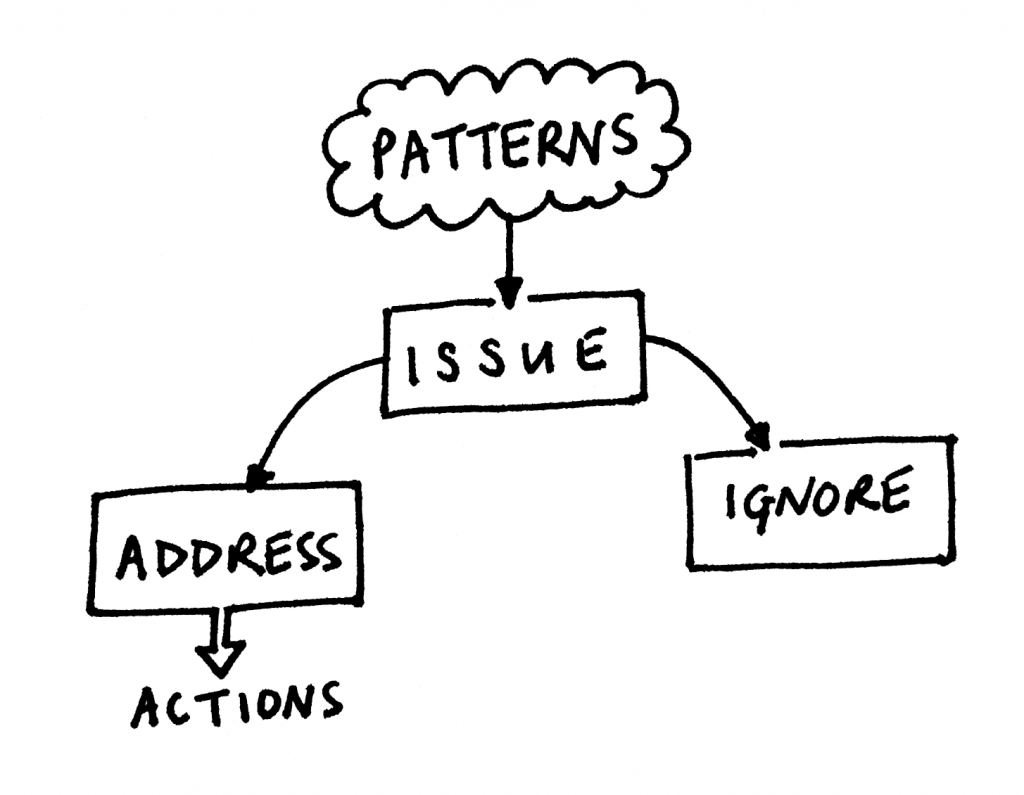 Back to the imaginary wearable. After you realise this issue with your colleague, your wearable can offer you two options: ignore or address.
Choose address and you’ll be guided through actions to help manage the stressful symptoms (like deep breathing exercises) and actions to help discover and manage the cause (like the ‘five whys’). Choose ‘ignore’ and you won’t have to do anything.
It’s important to have the ability to ignore something that’s ‘wrong’ with you. Therapeutic actions work when we want them to work; you can’t force them. Current wearables focusing on treating the ‘symptoms’ of imperfect humanity (Run faster! Sleep better! Eat healthier!) avoid looking at the causes, some of which might be painful or difficult.
Managing causes needs long term commitment from the individual, and that can be too much right now. A mindful wearable could bring the issue into the light, and then give you an educated choice about whether to address or ignore it – not avoid the issue completely by focusing purely on the symptoms.

Wearables have such potential in helping us see the health of our bodies in a way humans crave, through logic, data, patterns and symptoms. But mindfulness has the potential to heal our bodies and brains too, through clarity, awareness, causes and being present.
Combining the two could be incredibly powerful and commercially successful. It could, finally, move wearables from the niche market of luxury purchasers and gadget lovers into the real mainstream: technology which helps us understand ourselves comprehensively, from the inside out.